The timeline
Behind the Artisan Archive
More than a decade in the making, The Artisan Archive grew from a long inquiry into the systems behind what we wear. From garment worker organizing and global storytelling to field research and material revival, this timeline traces the experiences, relationships, and turning points that shaped the Archive into what it is today.
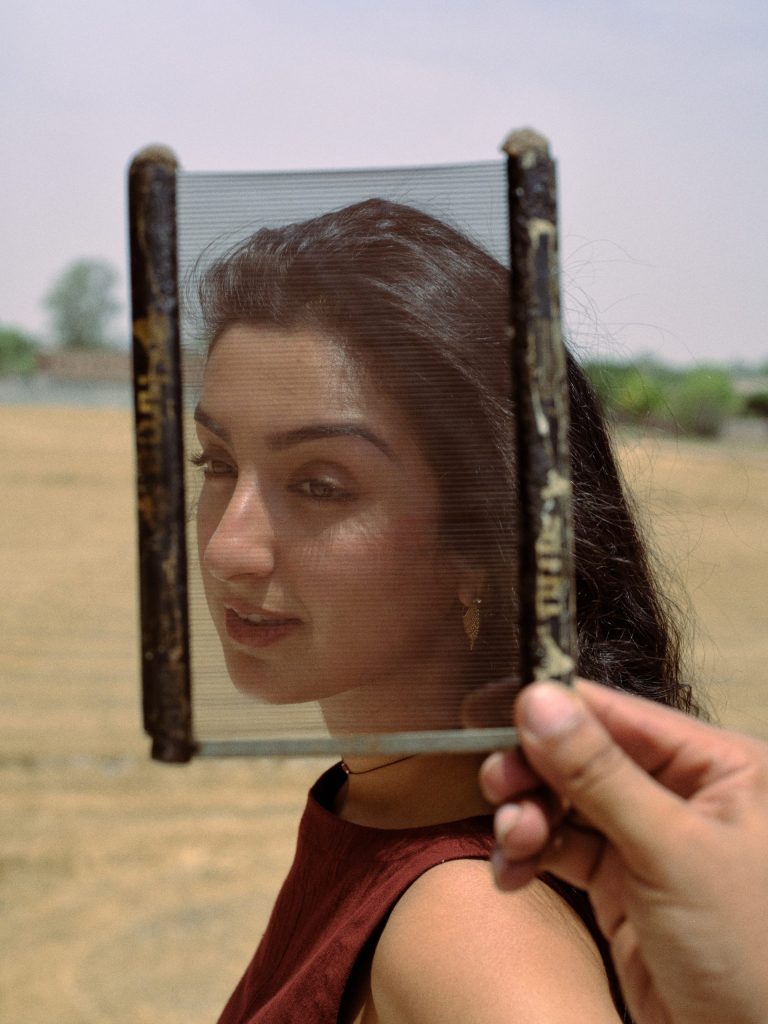
For our founder Aditi Mayer, after a decade exploring global supply chains and advocating for a fairer fashion industry, THE ARTISAN ARCHIVE marks a shift from observer to participant—from documenting a broken system to actively building an alternative.
2016

The Foundations
In 2016, Aditi began her career as a journalist and labor rights advocate in her hometown of Los Angeles, documenting garment workers’ fight for fairer labor conditions. Seeing workers fight against exploitative fast fashion companies– where profit, speed, and scale were paramount, marked her activist coming-of-age, seeing power being built from the bottom up.

In 2018, and the years that followed, Aditi’s work and assignments increasingly led her to the global arena to capture stories behind the supply chain, during which she began deeply exploring the antidote to fast fashion: slow fashion, rooted in time-honored craft traditions that reflected the social and ecological traditions that surrounded it.

In 2020, amid a global pandemic, the world saw the rise of the Indian farmer, via The Farmer Protests– a historic, year-long mass mobilization (the largest in human history) in which farmers camped out on major highways leading into India’s capital city to fight against government laws that they feared would let big corporations control crop prices and take away their financial safety nets.

In 2021, Aditi was named a National Geographic Digital Storytelling Fellow, set with the goal of understanding the fashion industry through the lens of India’s agriculture and artisans. The Farmer Protests inspired her in telling the story of fashion down to the farmer level, reflecting her own family’s lineage of farmers from Punjab.

The Seed Saved For The Future
In June 2022, Aditi began traveling Punjab alongside Kheti Virasat Mission (KVM), a non-profit environmental organization in Punjab founded in 2005 to counter the environmental and public health crises caused by The Green Revolution— depleted groundwater, poisoned soil, and rising cancer rates— through promoting organic farming and the reintroduction of heirloom seeds.
While speaking to farmer Joginder Singh in Punjab’s Malwa region, a cotton belt, Aditi asked him about the loss of desi kapas, the colloquial name for the region’s indigenous short-staple, naturally brown cotton. He recalled he had saved some of this cotton nearly 40 years ago, and found it in his shed.

Nearly four decades later, the cotton was still there.
These photographs were made the day Joginder Singh brought it out of storage.
In his own words– he had sensed The Green Revolution marked a shift, and as cotton (desi kapas) began to quickly disappear in favor of cash crops like rice and wheat, he had a sense to save this cotton for future generations.

The Revival of the Value Chain Begins
In August 2022, KVM’s Associate Director Rupsi Garg and Aditi traveled through Punjab to document grandmothers who were among the last stewards of the region’s handspinning and handloom textile traditions– all of which once hinged on desi kapas.
Across these visits, the story widened. It was not only the seed that had nearly disappeared, but the entire ecosystem around it: the farmers who grew it, the women who spun it, the weavers who turned it into fabric and shawls, and the traditions that once gathered communities around cloth-making.

It became clear that revival could not stop at agriculture. To bring back a fiber, the whole value chain had to be rebuilt.

The Weaving School is Born
In 2023, Rupsi reached out to Aditi with an idea: a weaving school by the name of Trinjan. In Punjabi culture, trinjan refers to a gathering where women would come together to spin cotton, sing folk songs, share stories, and transmit knowledge across generations.
Through her fashion and social impact network, Aditi seeded the initial $12,000 to bring the weaving school to life. Rupsi Garg launched Trinjan with an initial pilot for 20 women that was led by elder Shinder Kaur– who was photographed in her home the year prior as one the region’s last purveyors of the craft.

In late 2024, Aditi visited the Trinjan Weaving School, which was now taking shape as a permanent, physical space where knowledge could move from elder to younger hands. Women learned spinning, weaving, and the material language of native cotton, not as nostalgia, but as living practice.
Lead educator of the Trinjan Weaving School, Shinder Kaur, and her husband, Harnek Singh, join as a full-time mistri (carpenter) to build the school’s looms and spinning wheels.

In 2025, Aditi began building the seeds of The Artisan Archive– bringing to life the manifesto, values, and blueprint of the platform.
At the end of 2025, she began designing the initial collection, made from indigenous ‘desi kapas’ cotton, woven by the Trinjan Weaving School.

In February 2026, Aditi spent 4 months in India– creating the initial samples, cementing the supply chain, and documenting the full value chain– and cultural worldview– that brought the collection to life.
THE FIRST COLLECTION
In November 2026, The Artisan Archive will launch its first capsule collection from Punjab’s revived native cotton, woven by the Trinjan Weaving School.
Rooted in the region’s material and cultural language, the collection explores what fashion can become when its origin is traced back to seed, string, and silhouette. The garments draw from Punjabi dress traditions, including the salwar, reimagined through a contemporary lens while honoring the ecosystem, heritage, and lifestyle that shaped them. This first chapter is not simply a clothing launch. It is a proof of concept for a different kind of fashion system.

The Artisan Archive
Today, THE ARTISAN ARCHIVE exists as a storytelling platform, brand, and impact lab chronicling craft as a climate solution.
Our work begins in Punjab, where we are building one mile deep– instead of one mile wide.
But the vision extends beyond it: to honor ancestral knowledge systems, rebuild relationships between land and labor, and create cultural work that supports the communities who have kept these traditions alive. We are not interested in preserving craft as something frozen in the past. We are interested in what becomes possible when living traditions are given the infrastructure to continue.
If you are interested in supporting the work of THE ARTISAN ARCHIVE,
we are a registered 501(c)(3)– you can get in touch here to discuss opportunities for support, collaboration, and expansion.
We are honoring discredited ways of knowing. becoming archivists of living tradition. chronicling craft as climate solution.


